
Fixed tariff vs the price cap: how to compare
How to compare a fixed energy deal with Ofgem's price cap using your own usage, what the January 2027 cap decision means, and how exit fees change the sums.
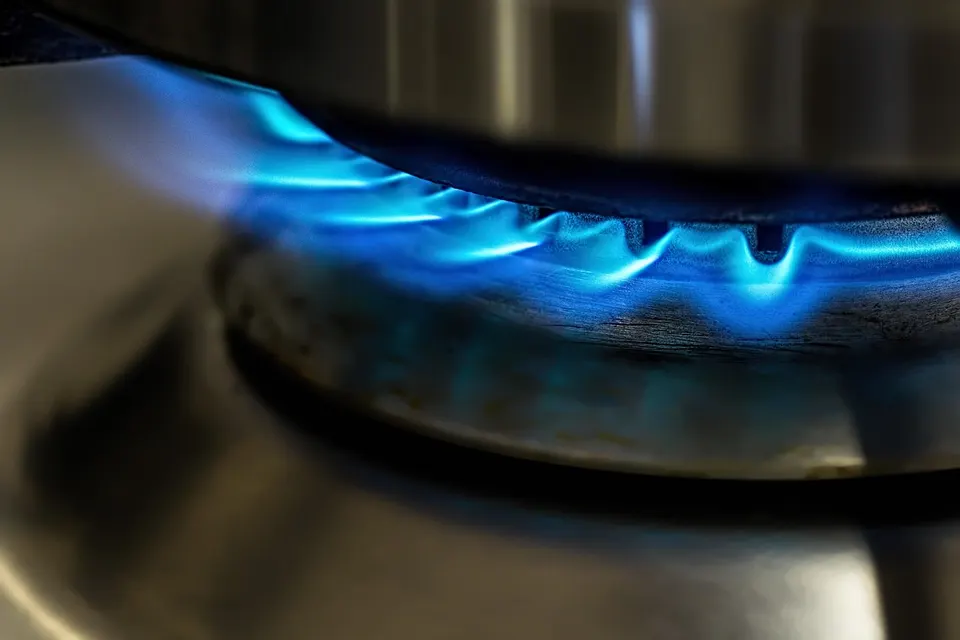
Every few months the same question comes round: should you fix your energy prices or stay on the price cap? Nobody can tell you which will work out cheaper, because that depends on where wholesale prices go next. What you can do is compare the two properly, using your own usage and the real rates, so you know what you are paying for certainty. This guide shows you how.
How the two options work
The price cap
If you are on a standard variable (default) tariff, Ofgem's price cap limits the most your supplier can charge for each kWh and for the daily standing charge. It is not a cap on your total bill: use more and you pay more. The Energy Saving Trust explains that Ofgem reviews the cap every three months, so your rates can rise or fall four times a year.
A fixed tariff
A fixed tariff locks your unit rates and standing charges for a set period, often a year or more. The price cap does not apply to it. Your bill can still change if you use more or less energy, but the price per unit does not. Many fixes charge an exit fee if you leave early.
According to Ofgem, about 35% of households were on fixed tariffs in August 2026, and some fixes were then priced £100 or more below the October cap.
Where the cap stands now
For 1 October to 31 December 2026, the average capped rates for Direct Debit customers in England, Scotland and Wales are:
| Unit rate | Standing charge | |
|---|---|---|
| Electricity | 26.32p per kWh | 54.83p per day |
| Gas | 7.97p per kWh | 29.68p per day |
Ofgem's summary turns these into a typical dual fuel bill of £1,723 a year by Direct Debit, £1,861 by standard credit (paying on receipt of a bill) and £1,678 by prepayment. Those figures assume 2,500 kWh of electricity and 9,500 kWh of gas a year. Your region and usage will give a different answer.
There is no VAT on household electricity from 1 October 2026 to 31 March 2027. Ofgem says customers on fixed tariffs benefit too, with suppliers applying the discount automatically.
What makes up your energy bill
Your bill is two charges: a fixed daily standing charge and a price for each unit you use. Change your usage to see how the split moves.
Uses the average price cap rates for 1 October to 31 December 2026, Direct Debit, England, Scotland and Wales: electricity 26.32p per kWh and 54.83p a day, gas 7.97p per kWh and 29.68p a day. Your region and tariff will differ.
The January 2027 cap
Ofgem will announce the cap for 1 January to 31 March 2027 on 25 November 2026, and may publish earlier if events require. At the time of writing, it has not been announced. Forecasts from suppliers and analysts circulate before each announcement, but they are estimates, not decisions. Until Ofgem publishes, any January figure you see is a prediction.
The following announcements are due on 23 February 2027 (for April to June 2027) and 26 May 2027 (for July to September 2027). Check Ofgem's website after 25 November for the confirmed January rates, and rerun your sums with them.
How to do the sums, step by step
- Find your annual usage. Look on your bill or online account for your kWh over the last 12 months, for electricity and gas separately. Our guide to reading your energy bill shows where.
- Get the capped rates for your region and payment method. Your supplier's website or your bill will show them.
- Get the fixed deal's rates. You need its unit rates and standing charges, its length and any exit fee.
- Work out the annual cost of each. For each fuel: (kWh × unit rate) + (365 × standing charge).
- Find the gap. Take one total from the other.
- Work out the break-even point. Divide the gap by the price cap total. That tells you roughly how far the cap would have to move for the two to cost the same.
A worked example
These figures are for illustration only. The fixed rates are invented to show the method and are not a real deal.
Using Ofgem's typical usage and the current capped Direct Debit rates:
- electricity: (2,500 × 26.32p) + (365 × 54.83p) = £658.00 + £200.13 = £858.13
- gas: (9,500 × 7.97p) + (365 × 29.68p) = £757.15 + £108.33 = £865.48
- cap total: £1,723.61
Now imagine a fix at 25.00p and 55.00p a day for electricity, and 7.50p and 30.00p a day for gas:
- electricity: £625.00 + £200.75 = £825.75
- gas: £712.50 + £109.50 = £822.00
- fixed total: £1,647.75
The fix costs about £76 a year less at today's cap rates. That is roughly 4.4% of the cap total. So if the cap fell by more than about 4.4% on average across the fix, the cap would come out cheaper. If it rose, the fix would save more.
Notice that this fix has slightly higher standing charges than the cap. For a low user, standing charges are a bigger share of the bill, so the same fix could save less or cost more. That is why your own kWh matter.
How exit fees change the picture
Exit fees only matter if you might leave early. Add them to the cost of the fix in any scenario where you would want to switch, for example if the cap fell sharply.
Citizens Advice says you can leave a fix without an exit fee when 49 days or fewer are left. When a fix ends and you do nothing, you are usually moved to your supplier's standard variable tariff, which is covered by the cap.
A fix with no exit fee gives you more room to move. A fix with a fee may be cheaper on paper but ties you in. Neither is right for everyone.
Questions to ask yourself
- How much do I value certainty? A fix makes budgeting easier. That has a value even if it ends up costing a little more.
- Could I leave early? If you might move home or switch, check what the exit fee would be.
- Does the deal suit my meter? Smart, prepayment and Economy 7 meters need a compatible tariff.
- Am I comparing like with like? Same usage, same payment method, same period.
Common mistakes to avoid
- Comparing a fix with the annual "typical bill" rather than with your own usage.
- Ignoring standing charges.
- Treating a forecast as if it were the next cap.
- Forgetting the exit fee when you work out the worst case.
Next steps
Pull your annual usage from your latest bill, then try the sums above or use our free energy fix checker. If you decide to move, our guide to switching energy supplier takes you through it. If you would like to talk through your options, our energy page can introduce you to a specialist.
Should I fix my energy?
Compare a fixed deal with staying on the price cap after January.
Ready to talk to an expert?
The energy price cap is £1,723 a year for a typical home until 31 December, and suppliers forecast a sharp rise from 1 January 2027. Some fixed deals are now cheaper than the current cap. An energy specialist can check whether fixing would save you money.
Sources
- Changes to energy price cap between 1 October and 31 December 2026, Ofgem, 26 August 2026
- Summary of changes to energy price cap, 1 October to 31 December 2026, Ofgem, 26 August 2026
- Energy price cap will rise by 4% from October 2026, Ofgem, 26 August 2026
- What is the energy price cap?, Energy Saving Trust, 19 October 2026
- Switch energy supplier or tariff, Citizens Advice, 24 August 2023
We check every figure and rule against official sources before publishing and update guides when things change. This guide explains how things work; it is not personal advice.
More gas & electric guides
Economy 7 and time of use tariffs: are you on the right one?
How Economy 7 and smart time of use tariffs work, who tends to gain, how EV charging fits in, and a simple sum to check whether your tariff suits your home.

Energy debt: what to do if you are behind on your bills
How to agree an energy repayment plan you can afford, your rights if a prepayment meter is proposed, the 2027 Debt Relief Scheme, grants and free advice.

How to claim the Warm Home Discount
Who gets the £150 Warm Home Discount in winter 2026 to 2027, when it is automatic, when to call the helpline, and the other winter payments you may be due.